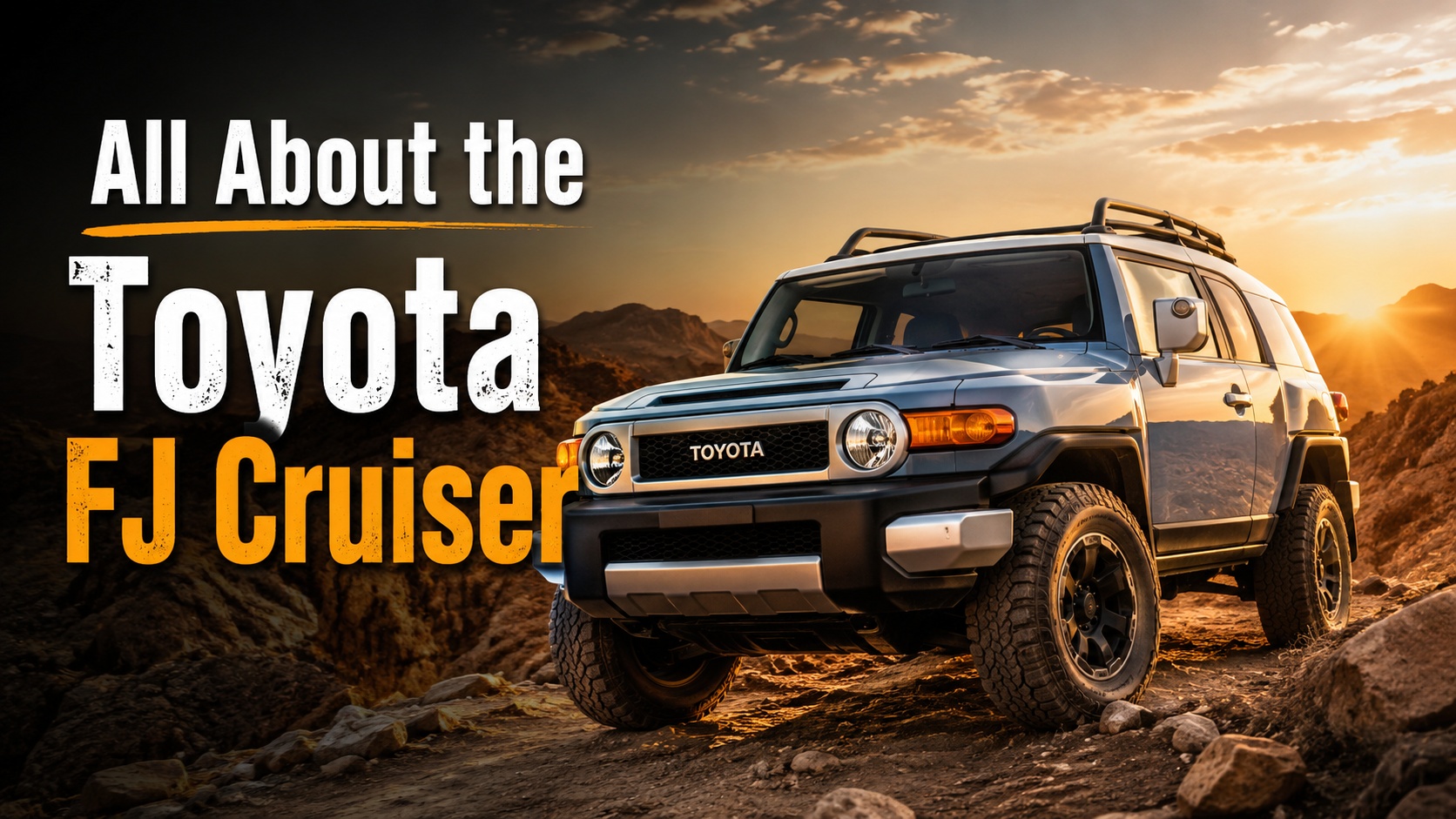
Why the FJ Cruiser Still Has a Cult Following
The Toyota FJ Cruiser was never a normal SUV. It was a retro-styled, body-on-frame Toyota built for people who wanted old-school Land Cruiser attitude with modern Toyota reliability. North American sales ended after the 2014 model year, yet the FJ Cruiser still commands a passionate enthusiast market and a resale reputation that most vehicles from its era would envy.
Part of that staying power comes from scarcity. U.S. sales were modest after the first two years, which kept the total pool of clean examples small and helped used values stay strong. Two decades after launch, the FJ Cruiser has quietly become a modern classic, and interest keeps growing as overlanding culture booms.
What Is the Toyota FJ Cruiser?
The Short Version
The FJ Cruiser is a retro-inspired mid-size SUV built by Toyota, sold in North America for the 2007 through 2014 model years and produced globally from 2006 until 2022. It rode on a body-on-frame platform and shared major underpinnings with Toyota trucks and Land Cruiser Prado-related vehicles, so the DNA underneath the funky sheet metal was pure Toyota 4×4.
Why It Was Different From Other SUVs
Everything about the FJ Cruiser was designed to stand out. The boxy silhouette, the contrasting white roof, the rear-opening access doors, the upright windshield, the trio of windshield wipers, the short wheelbase, and the rugged cabin all announced that this was a purpose-built machine, not a soft crossover chasing school-run comfort. In a showroom full of rounded, cautious designs, the FJ Cruiser looked like it had wandered in from a trailhead.
The History of the Toyota FJ Cruiser
Inspired by the Classic Toyota FJ40 Land Cruiser
The FJ Cruiser’s design was a deliberate tribute to the FJ40 Land Cruiser, one of Toyota’s most iconic off-road vehicles. Toyota’s Calty Design Research studio in California drew directly on the FJ40’s blocky proportions, round headlights, and white roof, translating those vintage cues into a modern package. The result honored the classic FJ without simply copying it.
From Concept Car to Production SUV
The FJ Cruiser started life as a concept. Toyota unveiled it at the 2003 Detroit Motor Show, and the public reaction was immediate and enthusiastic. Encouraged by the buzz, Toyota greenlit a production version, showed the showroom-ready model at the 2005 Chicago Auto Show, and launched it in North America in early 2006 as a 2007 model. The final North American model year came in 2014, but the story didn’t end there. Toyota kept building the FJ Cruiser for other markets, with the final global phase wrapping up in 2022.
Toyota FJ Cruiser Timeline by Year
2003: The Concept Car Appears
The FJ Cruiser concept debuted at the Detroit auto show and drew an instant, positive response. Toyota rarely sees that kind of unprompted enthusiasm for a rugged 4×4, and it was enough to push the project toward production.
2007: The FJ Cruiser Arrives in the U.S.
The production FJ Cruiser landed with a 4.0-liter V6, 4Runner-based architecture, and FJ40-inspired styling. Early models used a 239-horsepower 4.0L V6 and offered a five-speed automatic or, on 4WD models, a six-speed manual. It was old-school in the best way: a genuine off-roader wearing genuinely distinctive clothes.
2010: The Big Mechanical Update
The 2010 model year brought the most meaningful mechanical change of the FJ Cruiser’s life. The 4.0L V6 gained Dual VVT-i, adjusting timing on both the intake and exhaust camshafts. Power climbed to 259 horsepower, fuel economy improved slightly, and Toyota began recommending regular-grade fuel. This was also the year the signature Voodoo Blue paint faded from the lineup, making earlier blue examples especially prized.
2011–2013: Refinement Years
These were the polish years. Toyota offered the Off-Road Package with Bilstein shocks, added audio upgrades, and rolled in modern conveniences like Bluetooth and USB input. Year-to-year changes were small, but the FJ Cruiser was quietly getting better as a daily driver without losing its trail credentials.
2014: The Final U.S. Model Year
The last U.S. FJ Cruiser went out on a high note with the Trail Teams Ultimate Edition. Between the final-year status, the collectible trim, and the knowledge that Toyota wasn’t building any more for the American market, 2014 models became some of the most desirable in the entire run.
Design: Why the FJ Cruiser Looks So Unique
Retro Styling With Modern Toyota Engineering
The FJ Cruiser married an old-school front end to modern Toyota engineering. The blocky proportions, contrasting white roof, and TOYOTA wordmark grille all nodded to the FJ40, while the mechanicals underneath were current and dependable. Few vehicles have pulled off nostalgia and reliability at the same time this convincingly.
The Rear-Opening Doors
The FJ Cruiser used rear-hinged half-doors that open backward, with no B-pillar in the way when both doors are open. It’s a genuinely cool design that makes for a dramatic wide-open side profile. In practice, though, owners will tell you the front door has to be open before the rear one can swing, which gets awkward in tight parking spaces and busy lots.
The Three Windshield Wipers
Here’s a fun “things you didn’t know” detail: the FJ Cruiser has three windshield wipers instead of the usual two. The wide, upright windshield is so tall and broad that a third wiper was needed to keep the whole surface clear. It’s a small quirk that FJ fans love to point out.
Engine, Drivetrain, and Key Specs
4.0L V6 Engine
At the heart of every FJ Cruiser is the 1GR-FE 4.0-liter V6, one of Toyota’s most bulletproof engines. Early cars made 239 horsepower; the 2010 Dual VVT-i upgrade pushed output to 259 and improved efficiency. This is the same family of engine used in Toyota trucks, and it carries that same reputation for going the distance with basic maintenance.
Automatic vs. Manual Transmission
Buyers had a real choice here. A five-speed automatic was the mainstream option, while a six-speed manual was available on 4WD models. The drivetrain setup differs in an important way: manual 4WD models use a full-time four-wheel-drive system with a locking center differential, while automatic 4WD models use a part-time system. Enthusiasts often seek out the manual full-time 4WD cars for their added capability and involvement.
Towing, Ground Clearance, and Off-Road Angles
The FJ Cruiser’s numbers back up its trail reputation. Key figures for the 4×4 include a 5,000-pound towing capacity, 9.6 inches of ground clearance, a 34-degree approach angle, a 30-degree departure angle, and up to 27.5 inches of water fording capability. These weren’t marketing figures dressed up for a brochure. Toyota engineered the FJ Cruiser for real off-road use, not just rugged styling.
Off-Road Capability: Why the FJ Cruiser Earned Its Reputation
Built for Trails, Not Just Looks
Plenty of SUVs look tough. The FJ Cruiser actually was. Toyota tested it on demanding trails, and its low-range gearing gave it a deep crawl ratio that helped it traverse California’s famed Rubicon Trail. Combine that with A-TRAC traction control and an available electronic locking rear differential, and you have a machine built to earn its stripes off pavement.
Key Off-Road Features
The FJ Cruiser’s off-road hardware reads like a serious 4×4 checklist:
- A-TRAC active traction control
- Available electronic locking rear differential
- Low-range transfer case
- Short wheelbase for tight, technical terrain
- Body-on-frame construction
- Strong approach and departure angles
- Enormous aftermarket support
That last point matters. Because so many owners take these trucks off-road, the aftermarket for lifts, armor, bumpers, and lighting is deep, making the FJ Cruiser easy to build into a capable overlander.
Interior: Rugged, Simple, and Easy to Clean
A Cabin Made to Get Dirty
The FJ Cruiser’s interior was designed around the assumption that it would get muddy. Toyota used washable floors, water-resistant seat materials, and large controls you can work while wearing gloves. Hose out a filthy cabin, wipe down the surfaces, and you’re ready for the next trip. It’s a practical layout that fits the way owners actually use these trucks.
What People Love Inside
Owners consistently praise the durability, the simple controls, the high seating position, the easy cleanup, the optional gauge cluster on top of the dash, and the overall adventure-ready feel. It’s a cabin with a purpose, and that clarity is a big part of the appeal.
What People Complain About Inside
It isn’t perfect. The most common gripes involve blind spots, a small rear seat, awkward rear-seat access through those half-doors, limited cargo practicality, road noise at highway speed, and poor visibility that makes tight city driving stressful. Most FJ owners simply accept these as the cost of the design.
Toyota FJ Cruiser Model Years and Changes
Best Years to Know
If you’re skimming for the highlights, here’s the quick guide:
- 2007: First year, original 239-hp engine, strong enthusiast appeal
- 2008: Side airbags became standard
- 2009: Backup camera and mirror updates became available
- 2010: Engine update to Dual VVT-i and improved fuel economy
- 2011: Off-Road Package and audio upgrades
- 2012–2013: Mostly carryover years
- 2014: Final U.S. year and the Trail Teams Ultimate Edition
Those major changes cluster around 2008 to 2011, then the FJ Cruiser stayed largely consistent through its final years.
Special Editions and Packages
TRD Special Edition
The early TRD Special Edition set the template for a hotter FJ Cruiser, pairing distinctive paint with a black roof and adding TRD hardware like Bilstein shocks, rock rails, and unique wheels. These early cars have a following of their own.
Trail Teams Special Edition
Trail Teams models layered on exclusive paint colors, blacked-out trim, and off-road-focused hardware in limited numbers each year. Their limited production makes them collectible, and clean examples are increasingly hard to find.
2014 Trail Teams Ultimate Edition
The 2014 Trail Teams Ultimate Edition is the crown jewel. As the final U.S. FJ Cruiser, it brought TRD suspension work, Bilstein dampers, a skid plate, and unique appearance features. That combination of last-of-the-line status and genuine hardware upgrades makes it one of the most sought-after FJ Cruisers on the used market.
What Owners Love About the FJ Cruiser
Reliability
Ask an FJ owner what they love, and reliability comes up first. These trucks earn a reputation for being extremely dependable, especially when rust is kept in check and maintenance stays on schedule. That 1GR-FE V6 routinely clears 200,000 miles without drama.
Personality
This is where the FJ Cruiser separates itself from ordinary SUVs. It isn’t just transportation. Many owners treat it as part of their identity, naming their trucks, joining forums and clubs, and building communities around a vehicle that refuses to blend in.
Off-Road Confidence
Owners love the blend of Toyota truck durability, a manageable size that fits real trails, and off-road ability that inspires confidence. It’s capable enough to matter but small enough to place precisely on a tight, rocky line.
Resale Value
The limited production window, the cult following, and the unusual styling have combined to keep resale strong. As demand for retro off-roaders grows, clean FJ Cruisers have appreciated in a way few mid-size SUVs ever do.
Common FJ Cruiser Problems and Complaints
Fuel Economy
This is the big one. Owner discussions repeatedly single out poor fuel economy as the FJ Cruiser’s most frustrating daily-driver drawback. A thirsty V6 in a boxy, heavy body was never going to sip fuel, and rising gas prices were a major reason U.S. sales cooled.
Visibility
The thick pillars, tall hood line, and limited rear visibility make parking and lane changes harder than they should be. Many owners recommend adding a backup camera and convex mirrors to take the anxiety out of tight spaces.
Rust
Rust deserves close attention, especially for buyers in snow states, coastal areas, and humid regions. Frame and undercarriage corrosion can turn an otherwise reliable FJ Cruiser into a headache, so inspection here is essential.
Windshield Chips and Cracks
That upright windshield is central to the FJ Cruiser’s look, but its steep, flat angle takes abuse from road debris. Chips and cracks are a common complaint, and replacements aren’t cheap.
Rear Seat Access
The half-doors are cool right up until you need to load a child seat or an adult into the back in a crowded lot. Great design, genuinely annoying in real life.
Used Toyota FJ Cruiser Buying Guide
What to Check Before Buying
Because these trucks were often used hard, a careful inspection matters more than usual. Focus on:
- Frame and undercarriage rust
- Complete service records
- Proper 4WD system operation
- Function of the rear differential lock
- A-TRAC operation
- Suspension wear
- Quality of any aftermarket modifications
- Windshield condition
- Signs of off-road abuse or water damage
- Early 2007–2008 inner fender issues
- Evidence of water leaks
An FJ Cruiser that’s been babied is a joy. One that’s been thrashed and neglected can hide expensive problems.
Best Model Years to Consider
There’s no single right answer, so match the year to your goals. Choose 2010 or newer for the updated Dual VVT-i engine and better efficiency. Chase a 2014 for collectability and the Ultimate Edition. And don’t dismiss earlier years, which can be excellent value if the condition is genuinely clean.
Who Should Buy One?
The FJ Cruiser is a great fit for off-roaders, Toyota truck fans, weekend adventurers, collectors, and anyone who simply wants something different from every crossover on the road.
It’s a poor fit for fuel-conscious commuters, families who need easy rear-seat access, drivers who rely on excellent visibility, and anyone who wants a quiet, modern, tech-heavy crossover. Know which group you’re in before you buy.
FJ Cruiser vs. Similar SUVs
FJ Cruiser vs. Toyota 4Runner
They share bones, but the FJ Cruiser is more distinctive and playful while the 4Runner is more practical, with easier rear-seat access and better everyday visibility. If personality tops your list, the FJ wins; if daily usability does, the 4Runner pulls ahead.
FJ Cruiser vs. Jeep Wrangler
The FJ Cruiser counters with Toyota reliability and better on-road comfort. The Jeep Wrangler answers with removable doors and top, plus deeper off-road heritage and a bigger modification culture. Both are icons; they just express it differently.
FJ Cruiser vs. Ford Bronco
The Bronco is newer and far more tech-heavy, with modern screens and configurable drive modes. The FJ Cruiser is simpler, older, and more Toyota-truck-like, which is exactly what its fans want. It’s modern convenience versus proven analog toughness.
FJ Cruiser vs. Land Cruiser
The FJ Cruiser is smaller and more playful; the Land Cruiser is more premium, more global, and built for serious expedition duty. They’re cousins with very different personalities and price points.
Things You Didn’t Know About the Toyota FJ Cruiser
- It started as a concept car at the 2003 Detroit auto show, and public enthusiasm pushed it into production.
- Voodoo Blue became its signature color, and its disappearance after the early years made those examples especially collectible.
- It was never officially sold new in the UK, which adds to its curiosity value for enthusiasts there.
- Some markets kept getting the FJ after the U.S. did not, with production continuing overseas until 2022.
- The manual 4WD version is especially interesting because it uses a full-time four-wheel-drive system rather than the automatic’s part-time setup.
- The interior was designed for mud, water, and gloves, with easy-clean surfaces throughout.
- It has three windshield wipers to cover that big, upright windshield.
- The FJ name connects back to Toyota Land Cruiser history, tracing straight to the legendary FJ40.
The FJ Cruiser and the Modern Restomod Scene
Why Classic FJ Builds Matter to the Story
It’s worth separating the two “FJs” people talk about. The Toyota FJ Cruiser is the 2006-to-2022 retro SUV covered here. The classic FJ40-style Land Cruisers are the vintage 1960s–1980s trucks that inspired its looks. Both share DNA and a name, but they’re different vehicles from different eras.
The FJ Company and Modernized Classic Land Cruisers
As a quick sidebar: The FJ Company builds high-end custom classic Toyota Land Cruisers, and its G40 is based on authentic classic 40-series Land Cruiser chassis and bodies re-engineered with modern Toyota components. It is an independent operation and is not affiliated with Toyota. It’s a fascinating corner of the wider FJ world, though it sits apart from the FJ Cruiser’s own story.
Why the FJ Cruiser Became a Modern Classic
It Was Weird in the Best Way
Rarity, unmistakable design, Toyota reliability, genuine nostalgia, and real-world utility all came together in one package. The FJ Cruiser was weird in the best possible way, and that weirdness is exactly why people still love it.
It Arrived Before the Retro SUV Boom Fully Exploded
Timing matters. The FJ Cruiser showed up before the retro-SUV wave fully took off. Now that the Ford Bronco is back, the Wrangler is stronger than ever, the Land Cruiser has been revived, and overlanding culture has gone mainstream, the FJ Cruiser looks less like an oddball and more like a vehicle that was simply ahead of its time.
Is the Toyota FJ Cruiser Worth Buying Today?
The Practical Answer
Yes, if you want a reliable, unique, off-road-capable Toyota and can live with the compromises. Budget for the fuel economy, respect the visibility limits, inspect carefully for rust, and you’ll own something dependable and genuinely fun.
The Honest Answer
It’s not the most practical SUV you can buy. But it may be one of the most memorable modern Toyotas ever built, and few vehicles from its era deliver this much character. For the right buyer, the FJ Cruiser isn’t just a purchase. It’s the start of a long relationship.